



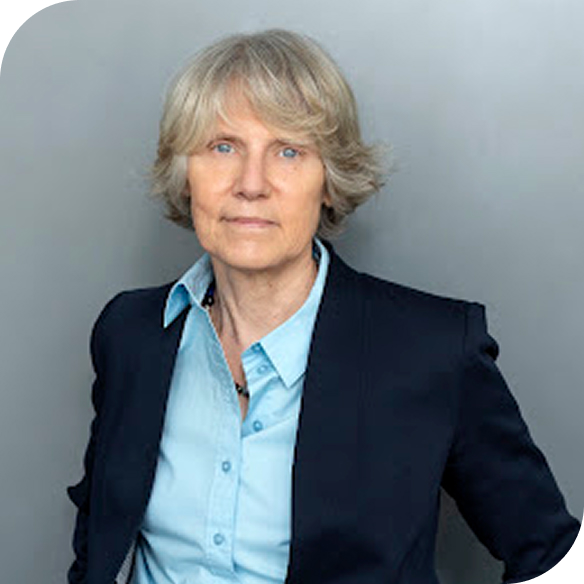
Francoise Melonio
Professor emerita at the Sorbonne
What would Tocqueville say about our democracies today?
Françoise Melonio, interviewed on France Inter in Le Grand Face-à-Face on the occasion of the release of her biography of Tocqueville, sheds light on this essential question.
She takes us back into Tocqueville’s world — his travels in the United States, but also in Canada, Ireland, and Algeria — and revisits his reflections, still strikingly relevant today, on the fragile balance between liberty and equality, the complex relationship with colonialism, and the decisive role of citizen participation, which goes far beyond the act of voting.
The program can be listened here
“The Life and Work of Alexis de Tocqueville”
On Répliques, hosted by Alain Finkielkraut, with Françoise Melonio and Sophie Vanden Abeele-Marchal.
A fascinating exploration of the man behind Tocqueville and his ever-relevant reflections on liberty, equality, social bonds, and individualism.
An essential perspective for understanding today’s democratic challenges.
The program can be listened here
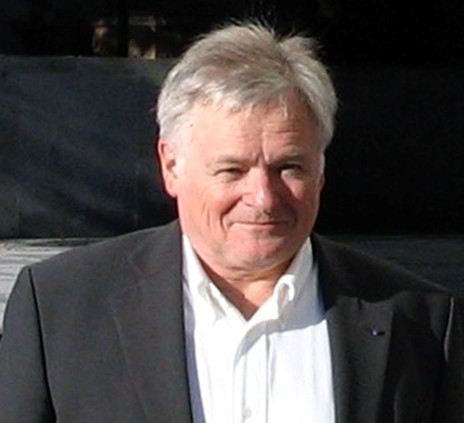
Jean-Louis Benoît
Philosopher
-
Tocqueville and the American Prison Model
In 1831, Alexis de Tocqueville traveled to the United States to study their prison system. This journey led to his work On the Penitentiary System in the United States, a visionary reflection on justice, freedom, and the relationship between the individual and the state.
A fascinating article by Jean-Louis Benoît in Historia revisits this crucial chapter of Tocqueville’s intellectual journey, which paved the way for Democracy in America and where Tocqueville explored the balance between punishment, protection, prevention, and rehabilitation — still central to today’s discussions on justice.
Article JL Benoît-Historia n° 944 - Lecture given at the Cercle Condorcet of Deauville on the theme “The Relevance of Tocqueville Today: Democracy and Democrature.” The text of this lecture can be download here.
- Presentation on the topic “The Social Democratic State, Democracy, Despotism, and Dictatorship,” delivered during a commemorative symposium marking the 30th anniversary of the Postgraduate Philosophy Program at the Federal University of Goiás. The text is available for download here.

Jean Yarbrough
Professor of social sciences at Bowdoin.
Find
the video of her lecture here, and
the accompanying readings here.

Joshua Mitchell
A political theorist at Georgetown.
Find
the video of his lecture here, and
the accompanying readings here.

Eric Keslassy
Sociologist and economist Eric Keslassy is the author of a dissertation linking the social question and democracy in the work of Tocqueville. He has published several books devoted to Tocqueville’s writings, including Tocqueville’s Liberalism Tested by Pauperism (L'Harmattan, 2000) and Alexis de Tocqueville: Reading Democracy in America (Ellipses, 2012).
Co-author with Jean-Louis Benoît of The Economic Texts of Alexis de Tocqueville (Pocket, 2005), he is currently preparing an Introduction to Tocqueville to be published by La Découverte (planned publication in 2027).
Tocqueville, or the Proposal for a New State
In this article published in L'Économie Politique, Eric Keslassy challenges the simplistic view of Tocqueville as being hostile to any state intervention. He demonstrates that the author envisioned a “situated state,” an administration capable of intervening occasionally in response to public calamities such as pauperism. Keslassy analyzes how Tocqueville seeks a middle path between the protective state advocated by socialists and absolute laissez-faire, particularly in order to regulate the industrial world.
The article is available online here:
https://shs.cairn.info/revue-l-economie-politique-2001-3-page-99?lang=fr
Tocqueville and Democracy in America
Published in Grands Dossiers des Sciences Humaines, this analysis revisits Tocqueville’s definition of democracy, not only as a political regime but as a “social state” based on equality of conditions. Eric Keslassy examines the fundamental tension between liberty and equality, the rise of democratic individualism, and the risk of a tutelary despotism, offering an essential framework for understanding the challenges of modern societies.
The article is available online here:
https://shs.cairn.info/la-sociologie--9782912601858-page-25?lang=fr
Tocqueville and the Penitentiary “Economy”
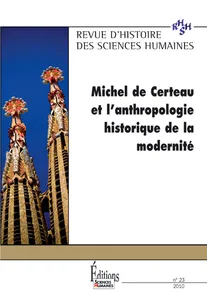
In the Revue d'Histoire des Sciences Humaines, Eric Keslassy sheds light on a lesser-known aspect of the author: Tocqueville as an economist. Through the study of prison reform and the debate between the Auburn and Philadelphia systems, he shows how Tocqueville integrates the economic costs of detention and the social cost of recidivism in order to define an effective penal policy. In this reflection, the protection of society takes precedence over simple philanthropy.
The article is available online here:
https://shs.cairn.info/revue-histoire-des-sciences-humaines-2010-2-page-175?lang=fr